High Protein Chipotle Orders for Gym Diet
Updated: March 2026 | Category: Gym Nutrition & Fast Casual | Read time: ~11 min
At some point, every person who lifts weights has stood in a Chipotle line mentally calculating macros. It happens. You’ve just left the gym, you’re thirty minutes post-workout, you need protein fast, and you’re not driving home to cook a chicken breast. Chipotle is right there. You know the ingredients are real. You know you can customize everything. But you’re also staring at a menu board that doesn’t tell you what a double chicken bowl with black beans and no rice is going to do for your numbers.
That’s what this guide is for.
I’ve spent time building and ordering high-protein Chipotle meals across different training goals — lean bulk, cut, maintenance, and those weird in-between phases where you’re just trying to hit 180 grams of protein without going over 2,200 calories. I’ve tested what actually works, what sounds good in theory but doesn’t hold up in practice, and how to navigate Chipotle’s new official High Protein Menu (which launched in late 2025) versus doing your own custom build.
Here’s everything you need.
Why Chipotle Actually Works for Gym Nutrition
Before we get into specific orders, it’s worth understanding what makes Chipotle a genuinely useful tool for athletes and gym-goers rather than just a “clean-ish” fast food option that sounds better than it is.
The first reason is ingredient transparency. Chipotle publishes detailed nutrition information for every single ingredient, and their online nutrition calculator lets you build custom meals and see exact macros before you order. No guessing, no “I think the chicken breast is around 30 grams of protein” — you can know. That’s not true at most fast casual restaurants. When you’re dialing in a cut phase or trying to hit a specific protein target on a training day, that precision matters.
The second reason is the double protein option. For a modest upcharge (typically $3–$4 depending on protein source), you can double any protein in your order. A single serving of Chipotle’s grilled chicken is 32 grams of protein at 180 calories. Double that and you’re at 64 grams of protein from 360 calories of meat alone — before anything else in the bowl. That’s a remarkable protein density for a restaurant meal. Most sit-down restaurants won’t give you that kind of protein load in a single order without either charging significantly more or packing it with extra fat and sauce.
The third reason is the modular build. Chipotle’s entire structure is built around choosing and skipping components. Want to skip rice to stay lower carb? Done. Want extra fajita veggies to add volume and micronutrients without adding meaningful calories? Done. Want to skip cheese and sour cream to cut unnecessary fat? Done. No special requests, no “is that possible,” no explaining yourself to the person behind the counter. You just don’t add those things. That level of dietary control at a fast casual chain is genuinely rare.
And finally — the ingredients are real. The chicken is marinated and grilled. The steak is actual beef cuts. The beans are cooked from scratch daily. There’s no filler protein, no breading, no mystery. For people who care about food quality alongside macros, Chipotle consistently delivers in a way that processed protein-heavy fast food simply doesn’t.
Chipotle’s Official High Protein Menu: What’s New in 2025–2026
In December 2025, Chipotle launched its first-ever official High Protein Menu — a curated set of builds designed specifically for protein-focused customers. The menu features items ranging from 15 to 81 grams of protein per order, and it represents the brand formally acknowledging what gym-goers have been doing on their own for years.
Here’s a breakdown of every item on the official menu and an honest take on where each one fits into a gym diet:
1. Double High Protein Bowl — 81g Protein | 760 Calories
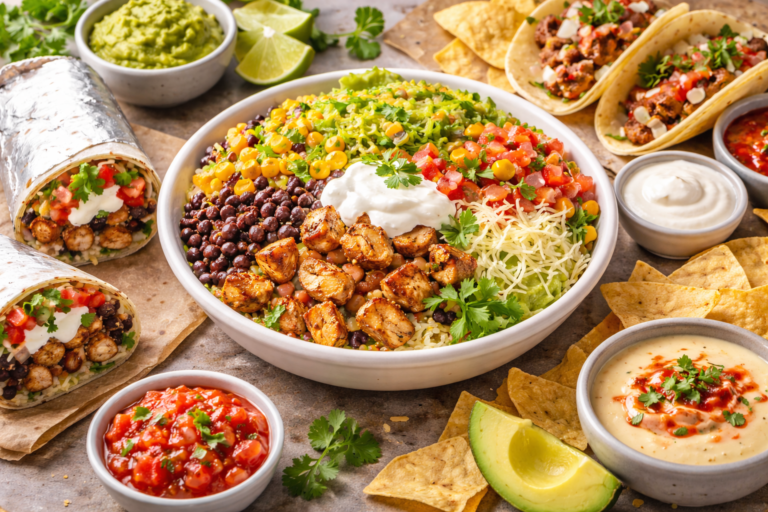
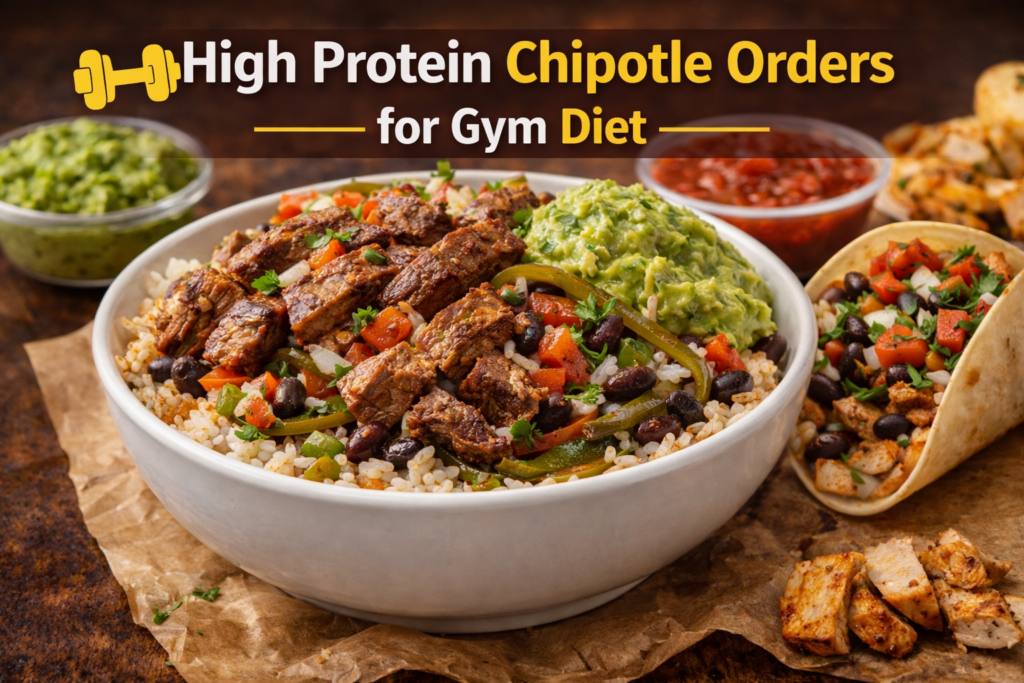
The Double High Protein Bowl features double Adobo Chicken, light white rice, black beans, fajita veggies, fresh tomato salsa, and Monterey Jack cheese. At 81 grams of protein for 760 calories, this is the best protein-to-calorie ratio on Chipotle’s entire menu for a complete meal. The macro split is exceptional for muscle building: high protein, moderate carbohydrates from the rice and beans, moderate fat from the cheese and chicken skin.
Best for: Lean bulk, post-workout meal on training days, high-volume eating phases.
Consider skipping: The cheese if you’re in a strict cut — it saves about 110 calories and 9 grams of fat without any protein loss.
2. High Protein-High Fiber Bowl — 46g Protein | 540 Calories
This bowl has 46 grams of protein and 14 grams of fiber at 540 calories. It includes Adobo Chicken, light brown rice, black beans, fajita veggies, roasted chili-corn salsa, fresh tomato salsa and romaine.
The 14 grams of fiber is the standout number here. For athletes who track fiber (and more should), getting 14 grams from a single meal is a meaningful step toward the 25–38 gram daily target. The brown rice instead of white is a considered choice — slightly more fiber, slightly lower glycemic load. This is also one of Chipotle’s officially designated “GLP-1 friendly” options, meaning it’s structured for satiety and blood sugar stability, which is also relevant for anyone in a calorie deficit who struggles with hunger management.
Best for: Cutting phases, people who want satiety alongside protein, anyone prioritizing gut health alongside performance goals.
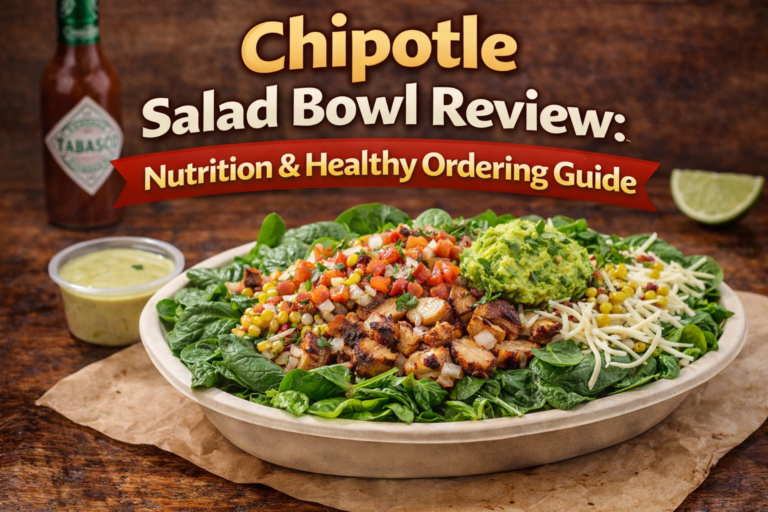
3. High Protein-Low Calorie Salad — 36g Protein | 470 Calories
The High Protein-Low Calorie Salad comes with Adobo Chicken, a supergreens lettuce mix, fajita veggies, fresh tomato salsa and guacamole. It contains 36 grams of protein, 10 grams of fiber and 470 calories.
I have mixed feelings about this one. The protein-to-calorie ratio is the weakest of the official high-protein options. At 470 calories for 36 grams of protein, you’re working harder for your protein than in the bowl configurations. The guacamole addition, which Chipotle frames as a healthy fat element, adds meaningful calories without boosting protein. If your primary goal is protein density, the bowl builds are more efficient.
That said, if you’re in a deep cut and you need to eat low volume while staying under a very tight calorie ceiling, the salad format can work. The supergreens lettuce mix is more nutrient-dense than the regular romaine used in most orders, and the absence of rice means you’re keeping carbs minimal.
Best for: Very low calorie cuts, people who genuinely prefer salads, anyone going low-carb for body composition reasons.
4. Double High Protein Burrito — 79g Protein | 840 Calories
This burrito has a full 79 grams of protein, 6 grams of fiber and 840 calories. It comes with double Adobo Chicken, fresh tomato salsa, fajita veggies, Monterey Jack and romaine.
The burrito format means a large flour tortilla, which adds roughly 320 calories and 50 grams of carbohydrates to your meal before you’ve added a single filling. For a lean bulk or a maintenance phase with high training volume, 840 calories and 79 grams of protein is actually a reasonable post-workout meal. For a cut, it’s borderline too high in calories for a single eating occasion unless it’s your largest meal of the day.
The main thing the burrito has over the bowl is portability and eating experience. If you’re eating in the car between the gym and work, the burrito is the move. Nutritionally, the bowl is more flexible and easier to strip down.
Best for: Bulking phases, athletes with high daily caloric needs, post-workout meals when you need volume alongside protein.
5. High Protein Cup — 32g Protein | 180 Calories
The High Protein Cup contains 32 grams of protein and 180 calories. It’s available with Adobo Chicken or Steak. This is essentially a snack-sized container of plain grilled protein — nothing else.
It’s the most macro-efficient item Chipotle has ever offered. 32 grams of protein for 180 calories is a ratio that competes with a plain grilled chicken breast. The use case is clear: pre-workout snack, protein top-up between meals, or an add-on to a lower-protein order to hit your daily target. The steak version runs slightly higher in fat and calories — closer to 210 calories for a similar protein count — but is excellent if you prefer the flavor profile.
The one honest criticism: it’s literally just meat in a cup. If you need a full meal, this isn’t it. But as a targeted protein delivery mechanism, it’s genuinely impressive for a fast casual chain to offer.
Best for: Pre/post-workout snacking, plugging protein gaps in your daily intake, keto and low-carb eating patterns.
The Custom Build Approach: Beyond the Official Menu
Here’s something important to understand: Chipotle’s official High Protein Menu is a useful shortcut, but it’s not necessarily the most optimized approach for every individual. The real power of Chipotle for gym nutrition lies in building your own configuration around your specific macro targets and training phase.
Let me walk through the protein sources and support ingredients in terms of gym diet utility:
Protein Sources: Ranked for Gym Use
| Protein | Calories | Protein (g) | Fat (g) | Best Phase |
|---|---|---|---|---|
| Adobo Chicken | 180 | 32 | 7 | All phases |
| Steak | 150 | 21 | 6 | Cut / Lean Bulk |
| Barbacoa | 170 | 24 | 7 | Bulk / Maintenance |
| Carnitas | 210 | 23 | 12 | Bulk (higher fat) |
| Sofritas | 150 | 8 | 10 | Plant-based builds |
| Black Beans | 130 | 8 | 2 | All phases (supplement) |
| Pinto Beans | 115 | 7 | 1 | All phases (supplement) |
The grilled Adobo Chicken offers the highest protein content of any protein source on the menu, delivering 32 grams at just 180 calories. That protein density is the main reason it’s the cornerstone of every serious high-protein Chipotle build. If you’re indifferent to protein source, always default to double chicken.
The steak is worth choosing when you want flavor variety — it has a rich, slightly charred taste that makes repetitive high-protein eating more sustainable. Barbacoa is slower-cooked and more tender, and the fat content isn’t dramatically higher than chicken, so it works well in a lean bulk without wrecking your fat macros.
The Double Protein Hack: The Most Important Order Strategy
If there is one thing that separates casual Chipotle customers from people who are genuinely using it as a gym nutrition tool, it’s the double protein order. Asking for double chicken doesn’t just add protein — it rebalances the entire macro profile of the meal. A standard bowl with single chicken, rice, beans, cheese, and sour cream might come in at 28–30 grams of protein for 900 calories. The same bowl with double chicken and no sour cream gets you to 56–60 grams of protein for roughly 850 calories. You’ve nearly doubled the protein while slightly reducing total calories by swapping a fat-heavy topping for more lean protein.
The upcharge is typically $3–4. On a per-gram-of-protein basis, that’s extremely good value relative to what you’d pay at a sit-down restaurant or even a meal prep service.
Four Gym Diet Builds I Actually Use
These are real configurations I order regularly depending on where I am in a training cycle. All macros are approximate based on Chipotle’s published nutrition data.
Build 1: The Lean Cut Bowl (~540 cal | 56g protein)
- Bowl (no tortilla, no chips)
- Double Adobo Chicken
- No rice
- Black beans
- Fajita vegetables (extra)
- Fresh tomato salsa
- Tomatillo-green chili salsa
- Romaine lettuce
- No cheese, no sour cream, no guac
This is my go-to during a cut. Skipping rice removes roughly 210 calories and 40 grams of carbs without any protein loss. The extra fajita vegetables add volume and fiber — crucial when you’re eating in a calorie deficit and need meals that feel substantial. The two salsas add flavor without calories. At approximately 540 calories and 56 grams of protein, this is among the most efficient high-protein fast casual meals you’ll find anywhere.
Build 2: The Lean Bulk Bowl (~760 cal | 81g protein)
- Bowl
- Double Adobo Chicken
- Light white rice
- Black beans
- Fajita vegetables
- Fresh tomato salsa
- Monterey Jack cheese
- Romaine lettuce
- No sour cream
This is essentially Chipotle’s official Double High Protein Bowl. I make no claims to originality here — it’s the best pre-configured build on the new menu for a reason. The light rice keeps the carbs moderate rather than eliminating them (carbs matter for training performance and glycogen replenishment post-workout). The beans provide both plant protein and fiber. The cheese adds flavor and a small amount of additional fat and protein without the caloric density of sour cream. This is a muscle-building meal in a bowl.
Build 3: The High-Fiber Maintenance Bowl (~640 cal | 55g protein)
- Bowl
- Double Adobo Chicken
- Light brown rice
- Both black beans and pinto beans (half and half)
- Fajita vegetables
- Roasted chili-corn salsa
- Fresh tomato salsa
- Romaine lettuce
- Guacamole (instead of cheese)
The dual beans add up to around 15–16 grams of combined protein and 11+ grams of fiber. The guac replaces cheese as the fat source — you’re trading saturated animal fat for mostly monounsaturated fat from avocado. This bowl runs about 640 calories with a strong fiber profile, which I’ve found keeps me genuinely full for 4–5 hours. Good for maintenance phases and rest days when you still need solid nutrition but don’t need to push calories as high.
Build 4: The Plant-Based Protein Bowl (~610 cal | 32g protein)
- Bowl
- Sofritas (double)
- Brown rice
- Black beans
- Pinto beans
- Fajita vegetables (extra)
- Both salsas
- Guacamole
- Romaine lettuce
The honest truth: if you’re plant-based and training seriously, Chipotle requires you to be strategic. Double Sofritas gets you 16 grams of protein from the tofu-based base, and the dual beans add another 15–16 grams, bringing you to about 32 grams of protein for the full bowl. That’s significantly lower than the chicken-based builds, but it’s well above what most plant-based fast casual meals deliver. Adding extra fajita vegetables gives you volume and micronutrients. The guac provides healthy fats and satiety.
If you follow a plant-based diet and are serious about hitting protein targets at Chipotle, it’s worth noting that the rest of the menu is quite accommodating for dietary restrictions — something worth exploring in depth through Chipotle’s allergen and vegan options guide, which breaks down exactly which ingredients are safe across common dietary restrictions, including gluten-free and dairy-free configurations.
Pre-Workout vs. Post-Workout: Does Timing Your Chipotle Order Matter?
The short answer is: somewhat, yes, but not dramatically for most people.
For pre-workout meals, you want something that digests reasonably quickly and doesn’t leave you feeling heavy during training. In this context, the leaner, lower-fiber builds work better. The High Protein Cup (just chicken or steak, no other components) is ideal as a pre-workout protein source if you’re eating within 60–90 minutes of training. A standard bowl with rice and beans is fine 2–3 hours before training, but the fiber content can cause discomfort if you’re eating too close to a workout, especially for high-intensity sessions.
For post-workout meals, the calculus shifts. After training — particularly resistance training — your muscles are primed to absorb protein, and replenishing muscle glycogen with carbohydrates is genuinely beneficial within the first few hours. This is the time to order the full bowl with rice and beans alongside your double protein. You want carbs here, not despite them. The Double High Protein Bowl (81g protein, moderate carbs from light rice and beans) is essentially purpose-built for the post-workout window.
The biggest practical mistake I see gym-goers make at Chipotle is ordering the same build regardless of training context — skipping carbs on a heavy training day because they’re “trying to be healthy,” when what they actually need is glycogen replenishment alongside the protein.
What to Skip and Why
Part of optimizing a Chipotle order for gym nutrition is knowing which ingredients work against you in specific contexts. Here’s an honest rundown:
Sour cream: 110 calories, 9 grams of fat, zero protein, zero fiber. For pure macro efficiency, it’s the weakest topping on the menu. It adds creaminess but nothing else of nutritional value for an athlete. Skip it or replace it with guacamole (which at least brings fiber and healthy fats).
Queso Blanco: 120 calories for 4 grams of protein and 9 grams of fat. The protein-to-calorie ratio is poor relative to just adding more chicken. If you love queso, order it knowingly — it’s not a protein booster, it’s a flavor addition.
Flour tortilla (burrito format): 320 calories, 10 grams of protein, 50 grams of carbohydrates. Not inherently bad, but a significant caloric contribution from the vessel rather than the filling. If you’re trying to maximize protein per calorie, the bowl format is almost always the better vehicle.
Large portion of rice: A standard rice portion is around 210 calories for 40 grams of carbohydrates. Asking for “light rice” cuts this roughly in half. On a training day this is fine — on a rest day or during a cut, asking for light rice is an easy way to reduce calories without touching any of the protein components.
Chipotle vs. Other High-Protein Fast Casual Options
For context: how does Chipotle’s high-protein value stack up against the competition? If you’re deciding where to eat on a gym-focused diet, it’s a legitimate question. The fast casual space has genuinely improved on protein options in recent years, and Chipotle isn’t automatically the best choice for every scenario.
The honest answer is that Chipotle tends to win on ingredient quality, macro transparency, and customization flexibility — but there are specific scenarios where a competitor offers advantages. If you want a detailed comparison of how Chipotle stacks up head-to-head on menu quality, value, and nutrition across similar builds, the Chipotle vs. Qdoba comparison for 2026 is worth reading — particularly if there’s a Qdoba location convenient to your gym, since Qdoba’s protein options and customization structure are the closest direct comparison in the market.
The general finding: for high-protein gym eating specifically, Chipotle’s double protein option, ingredient transparency, and new official High Protein Menu give it a structural advantage over most competitors. The protein density you can achieve through double chicken at Chipotle is hard to match at the same price point in fast casual dining.
The Budget Question: How Much Does a High-Protein Chipotle Meal Actually Cost?
This is a real consideration for athletes eating Chipotle multiple times a week as part of a structured nutrition plan.
A standard single-protein bowl with rice, beans, salsa, and no premium additions runs roughly $10.50–$12.00 at most U.S. locations as of early 2026. Adding double protein brings that to approximately $13.50–$15.00. The High Protein Cup as an add-on is an additional $5.50–$6.50.
For a post-workout meal that delivers 60–80 grams of complete protein from real, minimally processed ingredients with no cooking required, $13–$15 is genuinely competitive pricing. A comparable meal prep service might cost $14–$18 per meal for similar macros. A sit-down restaurant would charge $18–$25 for a similar protein delivery. The value proposition, when you frame it that way, is strong.
If cost is a concern, the highest-value single order for gym nutrition is the Double High Protein Bowl from the official menu — it gives you 81 grams of protein for roughly $14–$15, which is under $0.20 per gram of protein from real food. That’s difficult to beat in any restaurant context.
Final Takeaways
Chipotle has always been a legitimate tool for gym nutrition. The launch of the official High Protein Menu in late 2025 just made it easier to order without doing the math yourself every time. But knowing how to build your own configurations — and understanding which ingredients serve your training goals in different phases — gives you significantly more control than just picking from the preset menu.
The key principles to keep in your back pocket: always default to Adobo Chicken as your base protein, always ask for double protein, skip sour cream and instead invest those calories in more chicken or guacamole, match your carbohydrate choices to training intensity and timing, and use the bowl format over the burrito when you want maximum control over calories and macros.
Chipotle won’t replace a structured meal prep plan or a sports dietitian. But as a fast casual solution for a training lifestyle — something you can hit on the way home from the gym without destroying your macros or your budget — it’s about as good as this category gets.
Quick Reference: High Protein Chipotle Macro Table
| Order | Calories | Protein | Fiber | Best For |
|---|---|---|---|---|
| Double High Protein Bowl | 760 | 81g | 11g | Lean bulk / post-workout |
| High Protein-High Fiber Bowl | 540 | 46g | 14g | Cut / satiety focus |
| High Protein-Low Cal Salad | 470 | 36g | 10g | Deep cut / low carb |
| Double High Protein Burrito | 840 | 79g | 6g | Bulk / high cal needs |
| High Protein Cup (Chicken) | 180 | 32g | 0g | Snack / protein top-up |
| Custom Lean Cut Bowl (DIY) | ~540 | ~56g | ~12g | Cut / calorie control |
All nutritional figures sourced from Chipotle’s published nutrition data and the official High Protein Menu launch (December 2025). Exact values may vary slightly by location and serving size. Always verify using Chipotle’s online nutrition calculator for your specific build before ordering.