How Chipotle Prices Changed From 2018 – 2026 (Data Analysis)
Chipotle Mexican Grill has experienced noticeable price changes over the past eight years. Customers who regularly eat at Chipotle often say the same thing: the food still tastes the same, the portions are still large, but the price feels very different compared to what they paid a few years ago.
So what really happened?
This data-driven analysis explains how Chipotle prices changed between 2018 and 2026, what caused the increases, how inflation affected menu costs, and whether Chipotle has actually become expensive compared to similar fast-casual restaurants.
If you want a complete breakdown of current pricing structure, you can also review this detailed Chipotle Menu Prices Guide (2026) which explains how pricing works today across different menu categories.
Quick Chipotle Price Timeline (2018–2026)
Chipotle does not maintain a fixed national price because menu costs vary by location, but earnings reports and industry tracking data show clear average price trends.
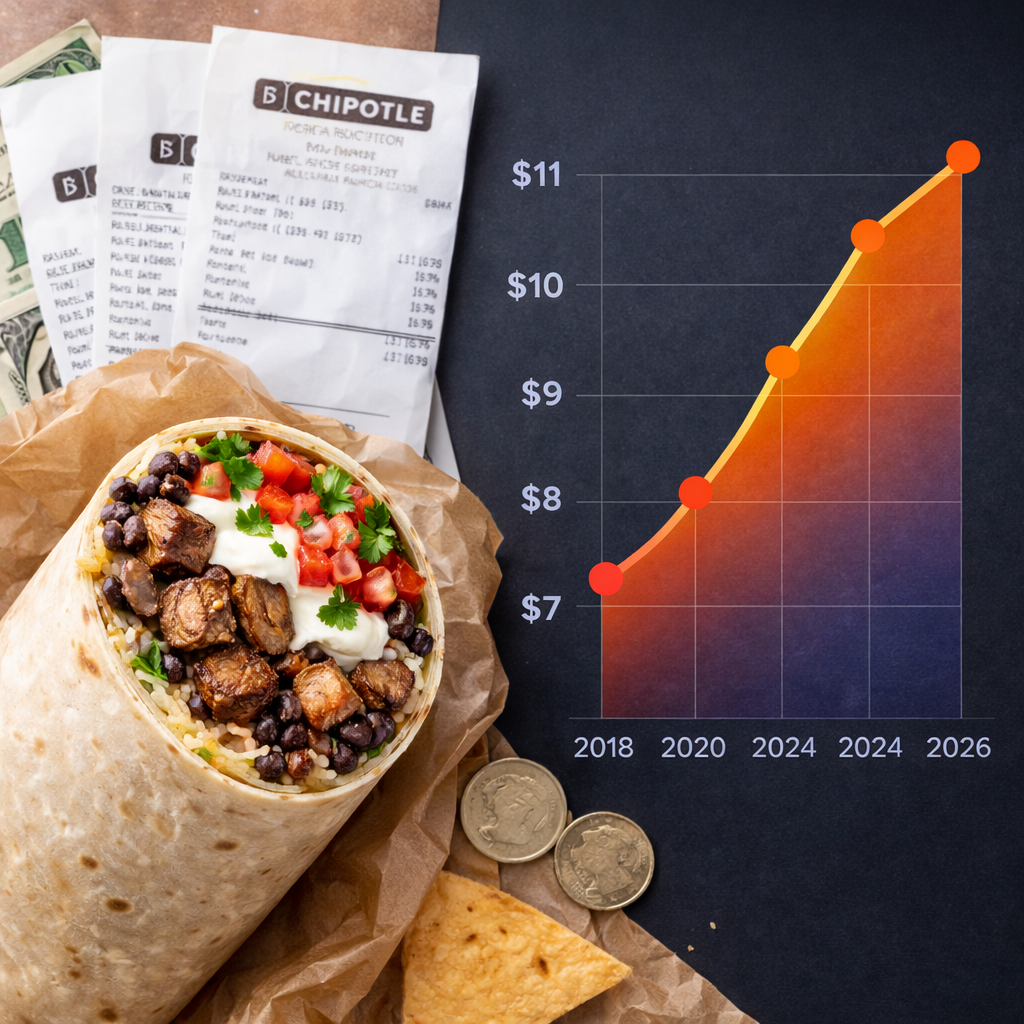
Here is a simplified estimate showing how a standard chicken burrito price evolved over time:
| Year | Average Burrito Price | Pricing Trend |
|---|---|---|
| 2018 | $8.00 – $8.50 | Stable pricing |
| 2019 | $8.25 – $8.75 | Minor increase |
| 2020 | $8.75 – $9.25 | Cost adjustments begin |
| 2021 | $9.25 – $9.75 | Labor driven increases |
| 2022 | $9.75 – $10.25 | Inflation impact |
| 2023 | $10 – $10.50 | Price stabilization |
| 2024 | $10.20 – $10.70 | Ingredient cost adjustments |
| 2025 | $10.30 – $10.90 | Moderate increases |
| 2026 | $10.40 – $11.00 | Small controlled increases |
This shows an overall increase of roughly 25–30% over eight years, which closely matches broader restaurant inflation trends.
According to U.S. Bureau of Labor Statistics food service data, restaurant prices increased significantly after 2020 due to inflation and wage pressure.
Source:
https://www.bls.gov/cpi/
2018–2019: A Period of Price Stability
Between 2018 and 2019, Chipotle focused heavily on rebuilding brand trust and improving operations. After earlier company challenges, the strategy was focused more on growth than aggressive pricing.
During this period, price increases remained very small. Some estimates suggest price increases averaged about 1–2% annually.
This was also when Chipotle invested heavily in mobile ordering and delivery systems, preparing for future digital growth.
At this time, Chipotle was widely considered one of the best value fast-casual restaurants because of portion size compared to price.
2020: Early Cost Pressure Begins
In 2020, early supply chain disruptions began affecting the entire restaurant industry. Transportation costs increased and restaurants began investing more in delivery systems.
Chipotle saw rapid growth in digital orders during this period. While this increased revenue, it also increased operating costs.
Instead of major price increases, Chipotle introduced small adjustments to maintain profit margins while keeping customer loyalty strong.
Reuters also reported that restaurants across the industry faced rising supply chain costs during this period.
Source:
https://www.reuters.com/business/retail-consumer/
2021: Wage Increases Changed Pricing Direction
2021 marked one of the most important pricing turning points.
Chipotle increased average employee wages toward $15 per hour to remain competitive in a tight labor market. This move improved hiring but increased operating costs.
To offset these changes, Chipotle increased menu prices by roughly 10% compared to the previous year.
This marked the first period when customers began widely noticing price increases.
Restaurant industry analysis confirms wage increases were a major factor in menu pricing changes.
Source:
https://www.restaurantdive.com
2022: The Inflation Spike Period
2022 was the biggest year for Chipotle price growth.
Inflation affected nearly every food category including:
- Beef prices
- Dairy products
- Cooking oil
- Avocados
- Transportation fuel
According to industry data, Chipotle prices increased roughly 20% compared to 2020 by the end of this inflation period.
This was not unique to Chipotle. Nearly every fast-casual chain increased prices during this period.
The U.S. Department of Agriculture also reported major food price inflation during this period.
Source:
USDA Food Price Outlook Report
2023: Stabilization After Inflation
After aggressive increases in 2021 and 2022, Chipotle slowed pricing changes in 2023.
The company instead focused on operational efficiency improvements such as:
- Improving kitchen throughput
- Faster digital pickup systems
- Better ingredient sourcing contracts
Prices still increased slightly, but the pace slowed significantly compared to the inflation years.
2024: Ingredient Cost Adjustments Continue
In 2024, Chipotle introduced another small price increase of roughly 2% nationally. Company statements suggested this was mainly due to higher ingredient costs.
Avocado prices were especially volatile during this period, which also explains why guacamole remains a paid add-on.
Reuters reported Chipotle confirmed price adjustments due to rising input costs.
Source:
Chipotle price increase report
2025–2026: Controlled Price Growth Phase
Recent financial reports show Chipotle now prefers smaller price increases rather than large adjustments.
In 2025 and 2026, price increases remained around 1–2% annually. This suggests Chipotle is trying to avoid customer backlash while still protecting margins.
Chipotle investor reports confirm pricing is now used strategically rather than reactively.
Source:
Chipotle Investor Relations Reports
Total Price Growth From 2018–2026
Comparing average prices shows the long-term increase clearly.
| Year | Average Burrito Price |
|---|---|
| 2018 | $8.25 |
| 2026 | $10.40 |
This represents about a 26% increase across eight years.
This increase aligns closely with restaurant industry inflation rather than being unusually high.
How Protein Prices Influenced Menu Costs
Protein selection also influenced price differences. Beef costs increased faster than chicken prices, which explains why steak remains more expensive.
If you want a detailed breakdown of steak value compared to other proteins, this Chipotle Steak Burrito Review explains whether paying extra for steak actually delivers better value.
Because beef prices fluctuate more than poultry, premium proteins saw larger price increases.
Main Factors That Drove Price Changes
Food Inflation
Ingredient costs remain the biggest factor. Restaurants depend heavily on commodity pricing.
Labor Costs
Labor typically represents about 25% of restaurant revenue costs.
Supply Chain Costs
Transportation remains a hidden cost customers rarely consider.
Brand Positioning
Chipotle positions itself as premium fast-casual rather than discount fast food.
How Chipotle Compares To Competitors
Chipotle price growth mirrors many competitors:
- Panera Bread prices increased similarly
- Sweetgreen raised prices after 2021
- Starbucks increased prices multiple times
This suggests Chipotle followed industry pricing trends rather than acting independently.
Customer Value Perception
Despite price increases, Chipotle still offers:
- Large portions
- Customizable meals
- Fresh ingredients
- High protein options
This explains why many customers still consider it good value despite price growth.
Future Pricing Outlook
Looking forward, Chipotle prices will likely continue small increases tied to:
- Inflation
- Wages
- Food commodity markets
- Economic stability
Most analysts expect gradual increases rather than sudden price spikes unless inflation returns.
Final Analysis
The data shows three clear pricing phases:
- 2018–2020: Stable pricing
- 2021–2022: Inflation driven increases
- 2023–2026: Controlled adjustments
Overall, Chipotle price increases reflect broader restaurant inflation rather than unusual company behavior.
Conclusion
Chipotle prices increased between 2018 and 2026 mainly because of inflation, rising wages, and ingredient costs. While customers pay more today, the increases are consistent with industry trends.
Understanding this data helps explain why a burrito that once cost around $8 now costs over $10 in many locations.
Despite this, Chipotle remains competitive within the fast-casual category because of portion size and ingredient quality.
For most customers, the real question is no longer whether prices increased — but whether the food still provides good value for the money.