Chipotle Nutrition Guide: Calories, Protein & Ingredients Explained
Let’s be honest—eating at Chipotle feels healthy. You’re standing in front of a counter watching real people assemble your food from actual ingredients you can recognize. There’s no fryer, no frozen patties, no mysterious sauce dispensers. It feels good. But here’s the question nobody wants to ask while the line is moving: how healthy is this meal actually?
I’ve spent months digging into Chipotle’s nutrition data, not just copying numbers from their website, but understanding what those numbers actually mean for real people eating real meals. I’ve talked to dietitians, compared portion variations across different locations, and tracked how ingredient choices change the nutritional profile of otherwise identical orders. This guide is everything I learned—the calories, the protein, the hidden pitfalls, and the strategies that actually work.
Whether you’re counting macros, managing health conditions, or just trying to make better choices without turning lunch into a math problem, this guide breaks down Chipotle nutrition in a way that’s useful, not just informational.
Why Customization Makes Nutrition Complicated
Chipotle’s greatest strength—complete customization—is also what makes nutrition tracking difficult. A chicken burrito could be 800 calories or 1,400 calories depending entirely on what goes inside it. The same menu item ordered by two different people can have wildly different nutritional profiles.
This means generic nutrition advice like “order the chicken burrito” is almost useless. What matters is how you build your meal. Understanding the building blocks lets you create meals that match your specific goals, whether that’s weight loss, muscle gain, or just feeling good after eating.
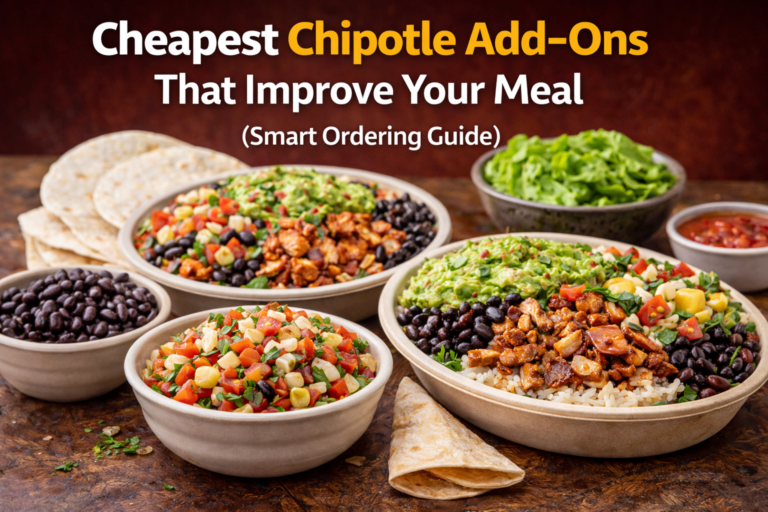
And here’s something most guides don’t tell you: some of the smartest nutritional improvements cost almost nothing. Small adjustments like adding beans or vegetables often improve meals more than expensive premium add-ons. The guide to cheapest Chipotle add-ons that improve your meal explains exactly which upgrades deliver the most nutritional value for the lowest cost.
Complete Protein Breakdown
Protein is usually the main event at Chipotle. It’s what makes the meal satisfying, what keeps you full, and what justifies the price for many customers. Here’s exactly what each protein option delivers.
Chicken
Serving Size: 4 oz
Calories: 180
Protein: 32g
Fat: 7g
Carbs: 1g
Chicken is the nutritional gold standard at Chipotle. It delivers the most protein per calorie of any option, and the fat content is reasonable. The adobo marinade adds minimal calories while providing significant flavor. For almost any health goal, chicken is a safe, reliable choice.
The only downside is consistency. Chicken can dry out if it’s been sitting, which affects enjoyment more than nutrition. Fresh chicken is juicy and flavorful; older chicken can be tough.
Steak
Serving Size: 4 oz
Calories: 150
Protein: 24g
Fat: 6g
Carbs: 2g
Steak actually has slightly fewer calories than chicken, but also less protein. The fat content is similar. The real difference is flavor and texture. Steak provides that grilled, smoky taste that chicken can’t replicate.
The nutritional trade-off is minor. Steak is still an excellent protein source, just slightly less protein-dense than chicken. If you prefer the taste, there’s no strong nutritional reason to avoid it.
Barbacoa
Serving Size: 4 oz
Calories: 170
Protein: 24g
Fat: 8g
Carbs: 2g
Barbacoa is braised beef shoulder, which means it’s cooked slowly until tender. This process concentrates flavor but also means slightly higher fat than steak. The protein content matches steak at 24g per serving.
The texture is completely different—shredded and moist rather than chopped and firm. This affects how it interacts with other ingredients. Barbacoa releases moisture into your meal, which can be good for preventing dryness but can also lead to sogginess if you’re not eating immediately.
Carnitas
Serving Size: 4 oz
Calories: 210
Protein: 22g
Fat: 13g
Carbs: 1g
Carnitas is slow-cooked pork that develops crispy edges during the finishing process. It’s delicious, but it’s also the highest-calorie protein option. The extra fat gives it that irresistible texture, but it adds about 60 more calories than chicken per serving.
For most people, this difference isn’t dramatic—60 calories is manageable. But if you’re building a high-protein, low-calorie meal, chicken is objectively better.
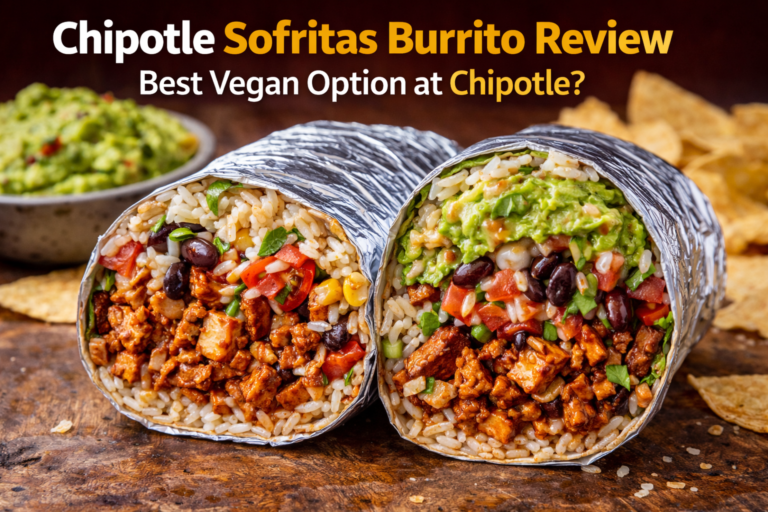
Sofritas
Serving Size: 4 oz
Calories: 150
Protein: 16g
Fat: 10g
Carbs: 6g
Sofritas is Chipotle’s plant-based option: shredded tofu braised with chipotle chiles and spices. It’s the only protein that comes with significant carbohydrates (6g) and less protein than animal options.
The nutritional profile is solid for a plant-based protein, but it’s not a direct substitute for meat in terms of protein density. Vegetarians and vegans should consider combining Sofritas with beans to boost total protein intake.
Rice and Beans: The Foundation
Rice and beans form the base of most Chipotle meals. They add volume, texture, and significant nutritional content.
Cilantro-Lime White Rice
Serving Size: 4 oz
Calories: 210
Protein: 4g
Fat: 3g
Carbs: 40g
White rice is simple rice cooked with bay leaves and finished with fresh cilantro and lime juice. It’s the lighter option both in color and texture. The lime adds brightness that cuts through heavier ingredients.
Nutritionally, it’s straightforward carbohydrates with minimal protein or fat. It’s useful for adding volume and energy but offers little beyond that.
Brown Rice
Serving Size: 4 oz
Calories: 210
Protein: 4g
Fat: 3g
Carbs: 40g
Surprisingly, brown rice has almost identical macronutrients to white rice at Chipotle. The difference is fiber and micronutrients. Brown rice retains its bran layer, which means more fiber (about 3g vs 1g) and more vitamins.
The flavor is nuttier and chewier. For most nutritional purposes, the difference is minor, but brown rice is slightly better for blood sugar management due to the fiber content.
Black Beans
Serving Size: 4 oz
Calories: 130
Protein: 8g
Fat: 1g
Carbs: 22g
Fiber: 7g
Black beans are a nutritional powerhouse. They deliver protein, significant fiber, and minimal fat. The fiber content is especially valuable because it slows digestion, stabilizes blood sugar, and increases fullness.
From a value perspective, beans are one of the best upgrades available. Adding extra beans boosts protein and fiber at minimal or no cost.
Pinto Beans
Serving Size: 4 oz
Calories: 130
Protein: 7g
Fat: 1g
Carbs: 22g
Fiber: 6g
Pinto beans are nutritionally similar to black beans, with slightly less protein and fiber. The difference is minor. The real distinction is texture and flavor—pinto beans are creamier and work better in certain combinations.
Either bean choice is excellent. The best pick depends on your taste preferences and what pairs well with your other ingredients.
Salsas and Toppings: Where Calories Hide
This is where meals can go sideways. Salsas and toppings seem harmless, but they add up quickly.
Fresh Tomato Salsa
Serving Size: 3.5 oz
Calories: 25
Protein: 1g
Carbs: 5g
Fat: 0g
Fresh tomato salsa is pure vegetables with minimal calories. It adds moisture, acidity, and freshness without significant nutritional impact. This is the safest salsa for calorie control.
Tomatillo Green Salsa
Serving Size: 2 oz
Calories: 15
Protein: 0g
Carbs: 3g
Fat: 0g
Green salsa is made from tomatillos, serrano peppers, and spices. It’s tangy and mildly spicy. Like the fresh salsa, it’s very low calorie and adds flavor without fat.
Tomatillo Red Salsa
Serving Size: 2 oz
Calories: 30
Protein: 1g
Carbs: 5g
Fat: 0g
Red salsa uses dried chipotle chiles, which gives it a smokier, deeper flavor than the green version. It’s slightly higher in calories but still negligible in the context of a full meal.
Roasted Chili-Corn Salsa
Serving Size: 3.5 oz
Calories: 80
Protein: 2g
Carbs: 15g
Fat: 2g
Corn salsa is where things change. It contains roasted corn, poblano peppers, onions, and jalapeños with a touch of lime. The corn adds significant carbohydrates and calories compared to other salsas.
This doesn’t mean corn salsa is bad—it adds sweetness and texture that balances spicy ingredients. But it’s not a free addition like the fresh salsas. Treat it as a meaningful ingredient, not just a topping.
Sour Cream
Serving Size: 2 oz
Calories: 110
Protein: 2g
Fat: 9g
Carbs: 3g
Sour cream adds richness and cools spicy ingredients, but it also adds significant calories and fat. It’s not unhealthy—dairy fat has its place—but it’s easy to add 100+ calories without thinking.
Cheese
Serving Size: 1 oz
Calories: 110
Protein: 6g
Fat: 9g
Carbs: 1g
Cheese is similar to sour cream nutritionally, with the bonus of protein. It’s shredded Monterey Jack and white cheddar, which melts nicely into warm ingredients.
Guacamole
Serving Size: 3.5 oz
Calories: 230
Protein: 3g
Fat: 22g
Carbs: 9g
Fiber: 6g
Guacamole is the most caloric topping, but it’s also the most nutritionally complex. The fat comes from avocados—monounsaturated fat that supports heart health. The fiber content is significant at 6g per serving.
The high calorie count means guacamole should be a deliberate choice, not an automatic addition. For some meals, it’s exactly what’s needed to create balance. For others, it pushes calories too high.
Fajita Vegetables
Serving Size: 2.5 oz
Calories: 20
Protein: 1g
Carbs: 4g
Fat: 0g
Fajita vegetables are grilled peppers and onions with minimal seasoning. They add volume, flavor, and texture for almost no calories. This is one of the best additions for improving meal quality without increasing calories significantly.
Lettuce
Serving Size: 1.5 oz
Calories: 5
Protein: 0g
Carbs: 1g
Fat: 0g
Romaine lettuce adds crunch and freshness for negligible calories. It’s especially valuable in burritos and bowls where texture contrast improves the eating experience.
Tortillas and Chips: The Carbohydrate Load
Flour Tortilla (Burrito Size)
Calories: 320
Protein: 9g
Fat: 8g
Carbs: 52g
The burrito tortilla adds significant calories before any ingredients are added. This isn’t inherently bad—carbohydrates provide energy—but it’s important to understand that the tortilla itself is a substantial part of the meal’s nutrition.
Taco Shells (per shell)
Soft Flour: 80 calories
Soft Corn: 60 calories
Crispy Corn: 70 calories
Taco shells are much lighter than burrito tortillas. Three tacos with soft corn shells add about 180 calories from the shells, compared to 320 from a single burrito tortilla. This is why taco meals often have lower total calories.
Chips
Serving Size: 4 oz (side order)
Calories: 540
Protein: 7g
Fat: 25g
Carbs: 73g
Chips are fried corn tortillas seasoned with salt and lime. A standard side order contains more calories than most entrees. Chips are delicious, but they’re essentially a separate meal nutritionally.
Queso
Serving Size: 2 oz
Calories: 120
Protein: 5g
Fat: 9g
Carbs: 4g
Queso is white cheddar cheese sauce. It’s similar to cheese nutritionally but with slightly different texture and application. Most people use it as a dip, which adds calories quickly.
Building Meals for Specific Goals
Understanding individual ingredients is useful, but the real value comes from combining them intentionally. Here’s how to build meals for different nutritional goals.
High Protein, Low Calorie
Target: Maximum protein with minimum calories
Best Base: Bowl (no tortilla)
Protein: Double chicken (64g protein, 360 calories)
Extras: Black beans (8g protein, 130 calories), fajita vegetables (20 calories), fresh salsa (25 calories)
Total Estimate: 535 calories, 72g protein
This meal maximizes protein density. Every calorie delivers nutritional value. It’s ideal for post-workout refueling or anyone prioritizing protein intake while managing calories.
Balanced Meal
Target: Sustainable energy, moderate calories
Best Base: Burrito bowl or tacos
Protein: Chicken or steak (24-32g protein)
Carbs: Brown rice (210 calories, 4g protein)
Fiber: Pinto beans (130 calories, 7g protein)
Vegetables: Fajita veggies and salsa
Optional: Cheese or sour cream (choose one)
Total Estimate: 600-750 calories
This approach balances protein, carbohydrates, and fat with plenty of fiber from beans and vegetables. It’s sustainable for regular eating without extreme restrictions.
Low Carb / Keto
Target: Minimal carbohydrates
Best Base: Bowl with lettuce base
Protein: Double steak or barbacoa (48g protein)
Fat Sources: Guacamole (22g fat), cheese (9g fat), sour cream (9g fat)
Vegetables: Fajita veggies, tomatillo salsa
Avoid: Rice, beans, corn salsa, tortillas
Total Estimate: 700-900 calories, 10-15g carbs
This meal replaces rice and beans with healthy fats from guacamole, cheese, and sour cream. It’s satisfying and compliant with ketogenic diets.
Vegetarian / Vegan
Target: Plant-based nutrition
Best Base: Bowl or tacos with corn tortillas
Protein: Sofritas (16g) plus black beans (8g)
Grains: Brown rice
Vegetables: Fajita veggies, all salsas
Healthy Fat: Guacamole (free with vegetarian orders)
Vegan Option: Skip cheese and sour cream
Total Estimate: 600-800 calories, 25-30g protein
Vegetarian meals benefit from combining multiple protein sources. Sofritas plus beans creates a complete amino acid profile, and guacamole adds healthy fat. The fajita vegetables are especially valuable here for texture variety.
Common Nutritional Mistakes
After watching hundreds of people order and analyzing countless meals, certain patterns emerge. Here are the most common mistakes people make.
The “Everything But The Kitchen Sink” Approach
Adding every available ingredient might seem efficient—you’re paying for a meal, why not get everything? But this usually creates nutritional chaos. Multiple salsas, both cheese and sour cream, rice and beans, and guacamole can push a meal past 1,400 calories before you realize what happened.
The better approach is choosing complementary ingredients rather than all ingredients. Pick one creamy element, one or two salsas, and build around your protein.
Ignoring Liquid Calories
People focus on the food and forget about drinks. A large soda adds 200-300 calories with no nutritional value. Even “healthy” options like juices or sweetened teas add significant sugar.
Water is free and nutritionally perfect. If you want something flavored, unsweetened iced tea is the next best choice.
Treating Chips as Part of the Meal
Chips are often ordered alongside entrees as if they’re a side vegetable. A 4-ounce serving of chips contains over 500 calories—more than many entrees. Sharing chips or skipping them entirely keeps meals reasonable.
Over-relying on “Healthy” Labels
Sofritas sounds healthy, and it is—but it’s not automatically lower calorie than meat. Brown rice sounds healthier than white, but the calorie difference is minimal. Guacamole is healthy fat, but it’s still 230 calories per serving.
The healthiest approach is understanding actual nutrition rather than relying on health halos around certain ingredients.
Portion Strategies That Actually Work
Chipotle portions vary by location and employee. This inconsistency can work for you or against you. Here’s how to manage portions intentionally.
Ask for Light or Extra
You can request light rice, light cheese, or extra vegetables. Employees are trained to accommodate these requests. If you want less of something calorie-dense, ask. If you want more vegetables, ask. The only cost is speaking up.
Consider a Bowl Instead of a Burrito
Bowl meals show you exactly what you’re getting. There’s no hidden density from tortilla compression. You also have the option to add a side tortilla and make your own burrito with part of the bowl, which gives you portion control and flexibility.
Use the “One Creamy” Rule
A simple heuristic: choose one creamy ingredient. That could be cheese, sour cream, or guacamole—pick one. This automatically controls the highest-calorie toppings without requiring detailed counting.
Smart Upgrades That Improve Nutrition
Some upgrades improve your meal nutritionally, not just in quantity. These are worth knowing.
Extra Beans
Adding extra beans boosts protein and fiber at minimal or no cost. This improves satiety and nutritional density without adding empty calories.
Fajita Vegetables
Fajita vegetables add volume, flavor, and micronutrients for almost no calories. They’re especially valuable in meals that feel too heavy or need texture contrast.
Double Protein (When It Makes Sense)
Double protein is expensive but nutritionally effective if your goal is high protein intake. It’s more cost-effective to add beans for protein if you’re on a budget, but double meat delivers concentrated protein without extra carbs or fat.
For a complete breakdown of which upgrades deliver the most value for your money, this guide to cheapest Chipotle add-ons that improve your meal covers exactly which inexpensive additions make the biggest difference.
Salsa Selection Strategy
Choosing two salsas—one fresh/light and one with more body—creates flavor complexity without adding many calories. Tomato salsa plus corn salsa, or green salsa plus red salsa, both work well.
Sample Meals With Nutrition Estimates
Here are complete meal builds with estimated nutrition. These are based on standard portions and actual orders.
The Fitness Meal
- Bowl with no tortilla
- Double chicken (64g protein, 360 calories)
- Black beans (8g protein, 130 calories)
- Fajita vegetables (20 calories)
- Fresh tomato salsa (25 calories)
- Lettuce (5 calories)
Totals: ~540 calories, 72g protein, 45g carbs, 10g fat
The Balanced Lunch
- Three soft corn tacos
- Steak (24g protein, 150 calories)
- Brown rice (105 calories for half serving)
- Pinto beans (130 calories)
- Corn salsa (80 calories)
- Cheese (110 calories)
Totals (including shells): ~760 calories, 38g protein, 85g carbs, 28g fat
The Keto Bowl
- Bowl with lettuce base
- Double barbacoa (48g protein, 340 calories)
- Fajita vegetables (20 calories)
- Tomatillo green salsa (15 calories)
- Cheese (110 calories)
- Sour cream (110 calories)
- Guacamole (230 calories)
Totals: ~825 calories, 50g protein, 18g carbs, 62g fat
The Vegetarian Feast
- Burrito bowl
- Sofritas (16g protein, 150 calories)
- Brown rice (210 calories)
- Black beans (130 calories, 8g protein)
- Fajita vegetables (20 calories)
- Corn salsa (80 calories)
- Fresh salsa (25 calories)
- Guacamole (230 calories, included with vegetarian)
Totals: ~845 calories, 27g protein, 115g carbs, 35g fat
Special Diets and Restrictions
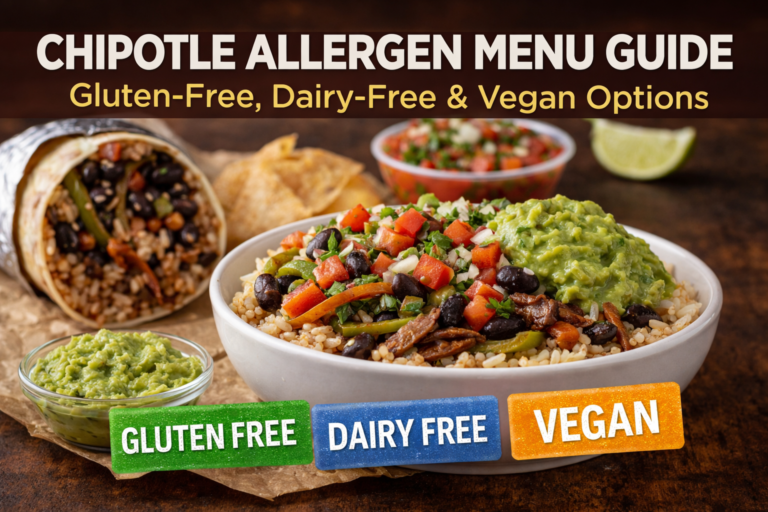
Gluten-Free
Most Chipotle ingredients are gluten-free, with the exception of flour tortillas. Corn tortillas are gluten-free. The main risk is cross-contact during preparation, but Chipotle trains employees on allergen handling.
Dairy-Free
Avoid cheese, sour cream, and queso. Everything else is dairy-free. Guacamole contains no dairy despite its creamy texture.
Nut Allergies
Chipotle uses no nuts in their standard ingredients. The main concern is cross-contact, but the risk is lower than at many restaurants.
Halal
Chipotle does not certify any meat as halal. The chicken, steak, barbacoa, and carnitas are not halal-certified. Vegetarian and vegan options are the safest choices.
Nutrition Myths Debunked
“Brown rice is always healthier than white rice”
Brown rice has slightly more fiber and nutrients, but the calorie difference is negligible. For most people, choosing based on taste preference is fine.
“Burrito bowls are always lower calorie than burritos”
Bowls without tortillas are lower calorie, but some people add chips or extra rice that offsets the difference. A burrito with light ingredients can be similar to a loaded bowl.
“Guacamole is unhealthy because it’s high fat”
Avocado fat is monounsaturated and associated with heart health. Guacamole is calorie-dense but nutritionally valuable. It’s not unhealthy—it’s just high calorie.
“Sofritas is lower calorie than meat”
Sofritas is similar in calories to steak and chicken, and higher in calories than chicken per gram of protein. It’s a valid choice for plant-based eating, not automatically a lower-calorie choice.
Conclusion: Knowledge Is Better Than Rules
After all this information, the most important takeaway is simple: understanding ingredients matters more than following rules. There’s no single “healthy Chipotle order” that works for everyone. Your goals, your preferences, and your body determine what’s right for you.
The value of this guide isn’t in telling you what to order. It’s in giving you the information to make your own decisions with confidence. Now you know what each ingredient actually contains, how combinations affect nutrition, and which choices move you toward your goals.
Chipotle’s customization is a feature, not a bug. Used wisely, it lets you build meals that fit your exact needs—whether that’s maximum protein for recovery, moderate calories for weight management, or simply delicious food that makes you feel good.
The best order is the one you understand. Build with intention, and enjoy every bite.