Chipotle Salad Bowl Review: Nutrition & Healthy Ordering Guide
I’ll be honest: for the first several years of my Chipotle life, I walked right past the salad option without a second glance. Salads were what you ordered when you were “being good,” not what you ordered when you actually wanted to enjoy your meal. They seemed like the diet version of the real thing—a compromise wrapped in romaine.
Then I actually tried one. Not as a punishment, not as a grudging concession to health, but as a deliberate choice. And I realized I had it completely backwards. The Chipotle Salad Bowl isn’t a sad alternative to the burrito. It’s a completely different eating experience—one that, when built correctly, can be more satisfying, more flavorful, and more nutritionally balanced than anything else on the menu.
This guide is everything I’ve learned after ordering dozens of salad bowls, tracking the nutrition, experimenting with toppings, and figuring out exactly how to build one that doesn’t feel like a diet meal. Whether you’re counting calories, watching carbs, or just want something fresh and filling, this is the definitive resource.
What Actually Is the Chipotle Salad Bowl?
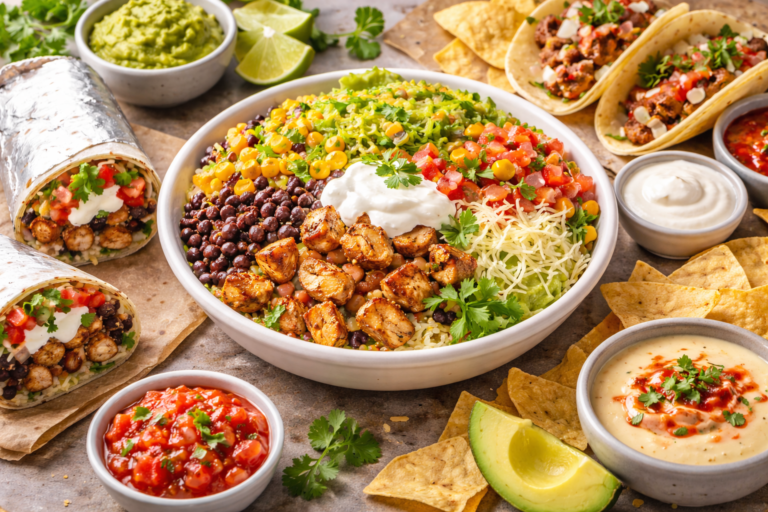
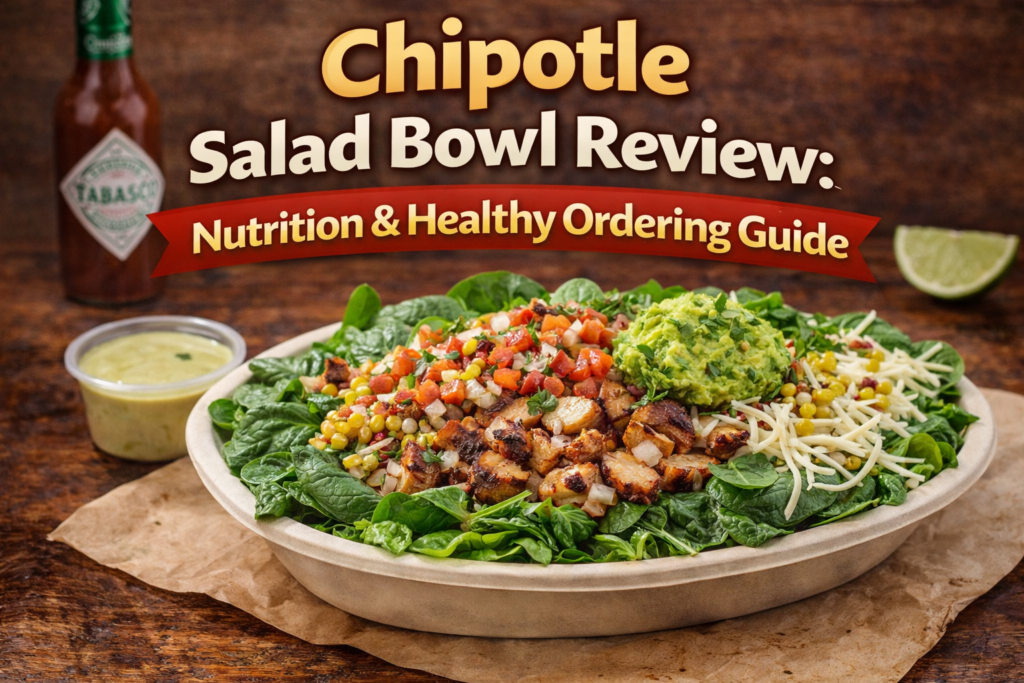
The Chipotle Salad Bowl starts with a base of crisp romaine lettuce. From there, you build it exactly like a burrito bowl—adding rice, beans, protein, salsas, and toppings—but the lettuce changes everything. It’s not just a bowl with lettuce thrown in; it’s a fundamentally different structure where freshness and crunch take center stage.
The salad also comes with a unique component you can’t get elsewhere: Chipotle’s Honey Vinaigrette. This tangy, slightly sweet dressing is made with red wine vinegar, honey, and chipotle peppers, and it’s the secret weapon that transforms the salad from a simple lettuce bowl into something special.
Understanding how to build this bowl requires knowledge of all your ingredients. For a deep dive into how different proteins compare nutritionally, the comprehensive Chipotle Nutrition Guide provides the foundation you need. And for a contrast in styles, the rich, indulgent Chipotle Quesadilla review shows the opposite end of the spectrum—proof that Chipotle serves every mood.
Why Choose the Salad Bowl?
Before we get into the weeds of nutrition and build strategies, let’s answer the fundamental question: when should you order the salad bowl?
Order the salad when:
- You want a lighter meal that doesn’t leave you feeling heavy
- You’re watching calories but still want a substantial portion
- You crave freshness and crunch alongside your protein
- You want to actually taste the individual ingredients instead of a compressed mash
- You’re eating low-carb and want a lettuce base instead of rice
Skip the salad when:
- You want maximum calories for your money (the burrito wins there)
- You’re in a hurry and need something easy to eat while walking
- You dislike vinaigrette dressings (though you can skip it)
- You want a comfort-food experience (the quesadilla is better for that)
The salad bowl is for when you want to feel good after eating, not just during.
Complete Nutrition Breakdown
Let’s get into the numbers. All data is based on standard Chipotle portion sizes.
Base Components
- Romaine Lettuce (1.5 oz): 5 calories, 0g protein, 0g fat, 1g carbs. Negligible nutrition but adds volume and crunch.
- Honey Vinaigrette (2 oz): 220 calories, 0g protein, 16g fat, 20g carbs (16g sugar). This is the calorie bomb—use strategically.
Protein Options (Per 4 oz Serving)
- Chicken: 180 calories, 32g protein, 7g fat. The gold standard for lean protein.
- Steak: 150 calories, 24g protein, 6g fat. Slightly leaner than chicken, slightly less protein.
- Barbacoa: 170 calories, 24g protein, 8g fat. Rich, braised beef with deep flavor. For more on this protein, the Chipotle Barbacoa Tacos review explores its flavor profile in detail.
- Carnitas: 210 calories, 22g protein, 13g fat. The richest option, with crispy edges.
- Sofritas: 150 calories, 16g protein, 10g fat. Plant-based tofu with complex spices.
Rice and Beans (Per 4 oz)
- White or Brown Rice: 210 calories, 4g protein, 3g fat, 40g carbs
- Black Beans: 130 calories, 8g protein, 1g fat, 22g carbs, 7g fiber
- Pinto Beans: 130 calories, 7g protein, 1g fat, 22g carbs, 6g fiber
Toppings and Salsas
- Fresh Tomato Salsa: 25 calories, 1g protein, 0g fat, 5g carbs
- Tomatillo Green Salsa: 15 calories, 0g protein, 0g fat, 3g carbs
- Tomatillo Red Salsa: 30 calories, 1g protein, 0g fat, 5g carbs
- Roasted Chili-Corn Salsa: 80 calories, 2g protein, 2g fat, 15g carbs
- Cheese: 110 calories, 6g protein, 9g fat, 1g carbs
- Sour Cream: 110 calories, 2g protein, 9g fat, 3g carbs
- Guacamole: 230 calories, 3g protein, 22g fat, 9g carbs, 6g fiber
- Fajita Vegetables: 20 calories, 1g protein, 0g fat, 4g carbs
The Dressing Dilemma: To Vinaigrette or Not?
The Honey Vinaigrette is the most polarizing item at Chipotle. Some customers love its tangy sweetness; others find it overpowering. Here’s what you need to know.
The good: It’s made with real ingredients—red wine vinegar, honey, chipotle peppers. It adds a unique flavor that complements the smoky proteins beautifully. A little goes a long way.
The challenging: At 220 calories per serving, it’s one of the most calorie-dense items on the menu. The 16g of sugar (from honey) is significant, especially if you’re watching your intake.
Strategies for the dressing:
- Light dressing: Ask for half the normal amount. You’ll get flavor without the full calorie hit.
- Dressing on the side: This is the pro move. Dip your fork in the dressing before each bite, or drizzle lightly as you go. You’ll use far less than if it’s mixed in.
- Skip it entirely: Use fresh tomato salsa and tomatillo salsa as your moisture sources. They add flavor for minimal calories.
- Alternative dressing: Some locations have salsa that can be thinned out to create a dressing-like consistency. Ask for extra tomatillo salsa and use it as your dressing.
Healthy Builds: Sample Salad Bowls by Goal
Here are specific, tested builds for different nutritional goals. These aren’t theoretical—I’ve eaten every one.
The Low-Calorie Power Salad (~370 calories)
- Base: Romaine lettuce
- Protein: Chicken (180 cal)
- Vegetables: Fajita vegetables (20 cal), extra
- Salsa: Fresh tomato (25 cal) and tomatillo green (15 cal)
- Dressing: None (use salsa for moisture)
- Extras: Optional squeeze of lime
Macros: ~32g protein, ~10g carbs, ~7g fat. This is a lean, clean meal that’s surprisingly filling thanks to the volume of lettuce and veggies.
The High-Protein Salad (~550 calories)
- Base: Romaine lettuce
- Protein: Double chicken (360 cal)
- Beans: Black beans (130 cal) for extra protein and fiber
- Vegetables: Fajita vegetables (20 cal)
- Salsa: Fresh tomato (25 cal)
- Dressing: None, or light on the side if desired
Macros: ~64g protein, ~40g carbs, ~10g fat. This is a post-workout powerhouse that rivals any protein shake.
The Keto Salad (~580 calories, ~10g carbs)
- Base: Romaine lettuce
- Protein: Barbacoa (170 cal) or Carnitas (210 cal)
- Healthy Fats: Guacamole (230 cal)
- Creamy Element: Cheese (110 cal) or Sour Cream (110 cal) – pick one
- Vegetables: Fajita vegetables (20 cal)
- Salsa: Tomatillo green (15 cal) – lowest carb option
- Avoid: Rice, beans, corn salsa, dressing
Macros: ~40g protein, ~55g fat, ~10g net carbs. Perfectly keto-friendly and deeply satisfying.
The Vegetarian Feast (~590 calories)
- Base: Romaine lettuce
- Protein: Sofritas (150 cal)
- Grains: Brown rice (210 cal) – half portion
- Beans: Black beans (130 cal)
- Vegetables: Fajita vegetables (20 cal), extra
- Salsa: Fresh tomato (25 cal) and corn salsa (80 cal)
- Healthy Fat: Guacamole (free with vegetarian orders, 230 cal)
- Dressing: On the side if desired
Macros: ~27g protein, ~85g carbs, ~25g fat. This is a complete plant-based meal with excellent texture variety.
The Balanced Classic (~485 calories)
- Base: Romaine lettuce
- Protein: Steak (150 cal)
- Grains: Brown rice (105 cal – half portion)
- Beans: Pinto beans (130 cal)
- Vegetables: Fajita vegetables (20 cal)
- Salsa: Fresh tomato (25 cal)
- Creamy Element: Cheese (55 cal – half portion)
- Dressing: None
Macros: ~35g protein, ~45g carbs, ~20g fat. A perfect everyday meal that doesn’t feel like a diet.
Protein Pairings: What Works Best in a Salad
Different proteins interact with the salad format in different ways. Here’s what I’ve learned.
Chicken
The safest choice. Its mild, smoky flavor works with everything, and its lean profile keeps the salad light. If you’re new to the salad bowl, start with chicken.
Steak
Excellent. The grilled, charred flavor stands up well to the vinaigrette. Steak adds a heartier element that makes the salad feel more substantial.
Barbacoa
This is an interesting pairing. The rich, moist barbacoa contrasts beautifully with the crisp lettuce. However, because barbacoa is so moist, it can make the lettuce wilt faster if you don’t eat immediately. The deep, complex spices are a wonderful counterpoint to the fresh ingredients. For a deeper appreciation of this protein, the barbacoa taco review captures its unique character.
Carnitas
The richest choice. The crispy pork bits add texture and intense flavor. Pair with fresh salsa and light dressing to avoid overwhelming the salad.
Sofritas
Plant-based and packed with flavor. The spicy, crumbled tofu works surprisingly well with the cool lettuce and fresh veggies. Add guacamole for healthy fat.
Topping Strategies for Maximum Flavor
The salad bowl gives you more freedom than any other format because the lettuce base can handle more ingredients without becoming a mess. Here’s how to build strategically.
The Salsa Formula
In a salad, you can be more generous with salsas because the lettuce absorbs moisture without becoming soggy immediately. My recommended formula:
- One fresh, bright salsa (Fresh Tomato or Tomatillo Green) for acidity
- One textured salsa (Corn or Tomatillo Red) for depth
- Optional: extra fresh salsa for more moisture instead of dressing
The Creamy Element
The “one creamy” rule applies here too, but with a twist: the dressing counts as a creamy element. If you use the vinaigrette, skip cheese and sour cream. If you skip the dressing, you can add cheese or sour cream (but probably not both).
Fajita Vegetables Are Mandatory
In a salad, fajita vegetables are even more important. The grilled peppers and onions add warmth, sweetness, and texture that elevate the cold lettuce. Always add them, and ask for extra—they’re usually free.
The Crunch Factor
The lettuce already provides crunch, but you can amplify it. Corn salsa adds pop, and a few tortilla chips on the side (if you’re sharing or have calories to spare) can be crumbled on top for a salad-crouton experience.
Salad Bowl vs. Other Formats: A Comparison
How does the salad stack up against Chipotle’s other offerings?
| Format | Calorie Range (Typical) | Best For | Worst For |
|---|---|---|---|
| Salad Bowl | 400-700 | Freshness, low-carb, vegetable-forward meals | Maximum calories, eating on the go |
| Burrito Bowl | 600-900 | Protein-heavy meals, value seekers | Low-carb diets, texture variety |
| Tacos (3) | 500-800 | Portion control, flavor experimentation | Large appetites, structural integrity |
| Quesadilla | 650-870 | Cheese lovers, comfort food | Low-calorie goals, dairy-free diets |
| Burrito | 800-1200+ | Maximum calories, portability | Calorie control, structural reliability |
Pro Tips for Ordering the Perfect Salad
After dozens of salad orders, here are the tips that actually matter.
- Ask for the lettuce on the bottom or top? I prefer lettuce on the bottom, then hot ingredients on top. This slightly wilts the bottom layer (which is pleasant) while keeping the top layer crisp.
- Get dressing on the side. This is non-negotiable for salad pros. It gives you complete control and prevents sogginess.
- Ask for extra fajita vegetables. They’re free, add flavor and texture, and make the salad feel more substantial.
- Consider half portions of rice and beans. If you want carbs but not a full serving, ask for “light rice” and “light beans.” You’ll get flavor and texture without the full calorie load.
- If you’re skipping dressing, get extra fresh salsa. The moisture from the salsa will help distribute flavors without adding 220 calories.
- Eat immediately. Salads wait for no one. If you’re taking it to go, plan to eat within 30 minutes for optimal texture.
Common Mistakes (And How to Avoid Them)
I’ve made every mistake so you don’t have to.
- Adding too many wet ingredients: Multiple salsas plus dressing plus sour cream turns your salad into soup. Choose one creamy element and one or two salsas max.
- Skipping the fajita vegetables: They’re the best texture addition and add almost no calories. Don’t skip them.
- Letting it sit too long: A salad bowl is for immediate gratification. If you need leftovers, get dressing on the side and store separately.
- Overloading with cheese: Cheese is delicious but adds 110 calories per serving. In a salad, a little goes a long way. Ask for light cheese.
- Treating it like a burrito bowl: A salad bowl needs more careful construction. The ingredients interact differently with lettuce.
When to Order the Salad vs. Other Items
The salad bowl has a specific place in the Chipotle ecosystem. Here’s when it’s the right choice.
Order the salad when: You want something fresh, you’re watching carbs or calories, you have time to sit and eat, you want to taste individual ingredients, you’re pairing it with a lighter protein like chicken or sofritas.
Order something else when: You want maximum calories per dollar (burrito), you need something portable (burrito), you want pure comfort food (quesadilla), you want controlled portions (tacos).
The salad bowl isn’t for every mood. But when you’re in the mood for it, nothing else compares.
Final Verdict: The Salad Bowl’s Place in the Menu
The Chipotle Salad Bowl is the menu’s most misunderstood option. It’s not a compromise—it’s a legitimate choice that offers something the other formats can’t: freshness, crunch, and the ability to taste each ingredient clearly.
Yes, it requires more careful construction. Yes, the dressing is a calorie bomb that must be managed. But when built correctly, the salad bowl is one of the most satisfying, nutritionally balanced meals Chipotle offers.
The final rating:
- Freshness: 10/10 (Unmatched crunch and brightness)
- Nutritional flexibility: 9.5/10 (Can be tailored to almost any diet)
- Flavor potential: 9/10 (When built right, it’s incredible)
- Ease of eating: 7/10 (Requires more attention than a burrito)
- Overall: 9/10 (A must-try for anyone who hasn’t given it a chance)
The salad bowl won’t replace my burrito orders entirely. But it has earned a permanent spot in my rotation. Give it a chance, build it with intention, and discover what you’ve been missing.
My Perfect Salad Build:
- Base: Romaine lettuce
- Protein: Chicken or Barbacoa
- Grains: Light brown rice
- Beans: Black beans
- Vegetables: Extra fajita vegetables
- Salsa: Fresh tomato + tomatillo green
- Creamy: Guacamole (and skip dressing)
- Extras: Fresh lime juice
Try it. You might become a convert too.