Chipotle Veggie Burrito Bowl Review
Updated: March 2026 | Category: Menu Reviews & Vegetarian Eating | Read time: ~12 min
There’s a particular kind of Chipotle customer that rarely gets written about. Not the double-chicken protein crowd. Not the person who orders the same carnitas burrito every single visit without thinking about it. I’m talking about the person who walks up to the line and says, plainly, “no meat” — and then has to figure out what that actually means at a chain where protein is the structural center of every menu item.
That’s who this review is for.
I’ve been ordering vegetarian at Chipotle on and off for years. Sometimes out of preference, sometimes out of cost, sometimes because I just don’t want a heavy meal. And in that time I’ve built a fairly detailed opinion about what actually works, what sounds better than it tastes, and how the veggie options at Chipotle hold up in 2026 against a menu that has never been more protein-focused.
The short version: the Chipotle Veggie Burrito and Bowl are genuinely good when you build them right. But most people don’t build them right. Here’s how.
What “Veggie” Actually Means at Chipotle
Before getting into the review, it’s worth sorting out the terminology because Chipotle uses a few different labels that can confuse people ordering for the first time or trying to hit specific dietary goals.
At Chipotle, “veggie” doesn’t automatically mean vegan, and it doesn’t mean low-calorie. It simply means you’re not adding one of the main animal proteins — chicken, steak, carnitas, barbacoa, or brisket. From there, you have two distinct paths:
The Sofritas route: Sofritas is Chipotle’s plant-based protein — organic tofu crumbled and braised in a sauce made from chipotle peppers, roasted poblanos, and a blend of spices. It counts as a “protein” in the Chipotle build structure, which means you pay the full entrée price and guacamole costs extra, the same as any meat order.
The pure veggie route: This is ordering with no designated protein at all — just beans, fajita vegetables, rice, and whatever toppings you choose. Historically, this configuration came with one significant perk: free guacamole, since you weren’t getting a protein. Chipotle changed this policy over time (free guac is no longer automatic at most locations), but the “veggie” build without Sofritas remains the most economical way to eat meatless at Chipotle.
Both options are worth understanding, and I’ll review both formats — burrito and bowl — across each route.
The Veggie Burrito: Format, Feel, and First Impressions
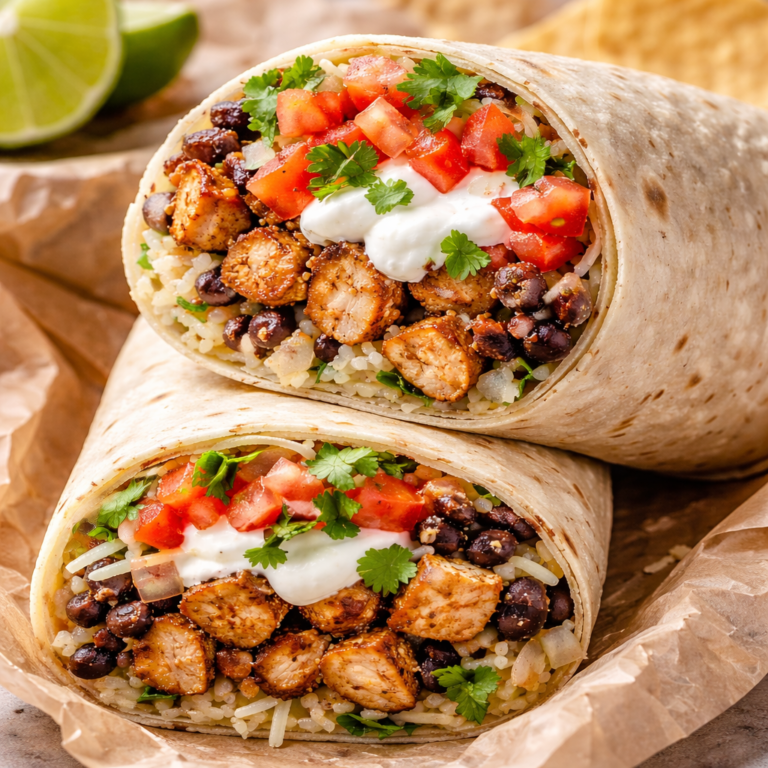
The Chipotle Veggie Burrito is built the same way as any other burrito: a large flour tortilla, wrapped around your choice of fillings, rolled tight. The tortilla itself runs about 320 calories and 50 grams of carbohydrates before you’ve added a single ingredient. That’s a significant caloric foundation, and it’s the biggest reason why people who are watching their numbers should give serious thought to the bowl format instead.
That said, the burrito experience has something the bowl doesn’t — and that’s the integrity of a wrapped meal. When you bite into a Chipotle burrito that’s been built and wrapped correctly, every bite contains every ingredient. The rice, the beans, the salsa, the guac — it’s all there in every mouthful. The bowl, by contrast, separates into layers, and if you’re not mixing as you go, the last few bites can end up being mostly rice with salsa. That’s not a knock against the bowl, it’s just a functional difference between the two formats.
For a veggie build, the burrito also serves an important structural purpose: the tortilla provides the bulk and heft that, in a meat-based order, would normally come from a heavy protein filling. Without chicken or steak, a burrito bowl can start to feel a little sparse in the middle of the eating experience. The tortilla filling compensates for that in a way that makes the veggie order feel more complete.
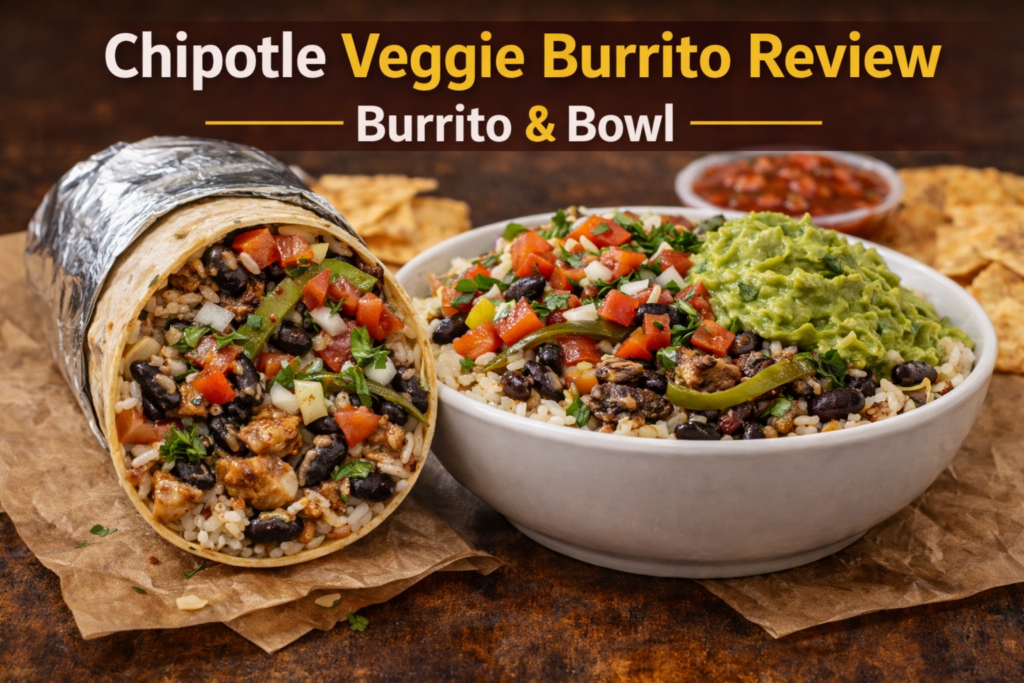
My honest first impression of the standard Veggie Burrito (rice, black beans, fajita veggies, guac, both salsas): surprisingly filling, genuinely flavorful, but easier to over-build than you’d think. If you add full rice, full beans, guac, cheese, and sour cream, you’re looking at a burrito that can push past 1,000 calories without any animal protein in it. That’s worth knowing.
The Ingredients: A Component-by-Component Review
The quality of your Chipotle Veggie order lives or dies by which components you choose. Here is an honest assessment of every relevant ingredient through the lens of veggie eating:
Fajita Vegetables
Fajita vegetables are the backbone of any meatless Chipotle order and they are, genuinely, excellent. Chipotle uses a mix of red and green bell peppers and red onions, seasoned with oregano and salt, cooked on the flat-top grill until they’re soft and slightly caramelized but not mushy. The oregano is key — it’s what gives them that particular savory, almost Mediterranean note that distinguishes them from plain sautéed peppers.
At just 20 calories per serving, they are also the most efficient volume ingredient on the entire menu. You can ask for extra fajita veggies without any upcharge, and I’d strongly recommend doing so in a veggie build. They bulk up the meal meaningfully, add color and texture, and contribute to satiety through fiber without loading your calorie count the way extra rice or cheese would.
One caveat: fajita veg quality is noticeably location-dependent. At high-volume locations with fast ingredient turnover, you get them freshly cooked, still slightly crisp, with real caramelization on the edges. At slower locations late in the day, they can sit on the line and turn soggy and pale. If they look gray and overcooked in the pan, asking for a fresh batch is always an option.
Beans: Black vs. Pinto
Beans are the primary protein source in a meat-free Chipotle build, and choosing correctly between black and pinto matters more than most people realize.
Black beans have a more complex, earthy flavor. They hold their shape better in the bowl or burrito, and they pair particularly well with the brighter salsas (fresh tomato, tomatillo-green chili) because the contrast in flavor profiles is sharp and clear. Black beans deliver about 8 grams of protein and 7.5 grams of fiber per serving.
Pinto beans are creamier, slightly more savory, and have a milder flavor that integrates into the overall bowl more smoothly. They break down more easily when mixed with rice and salsas, creating a texture closer to a refried bean effect. Pinto beans provide around 7 grams of protein and 7 grams of fiber per serving.
In a pure veggie build, I recommend combining both — half black, half pinto — to maximize protein and fiber while getting the best of both flavor profiles. The combined serving will land around 15 grams of protein and 14 grams of fiber, which changes the nutritional character of the meal meaningfully.
Rice: White vs. Brown
Chipotle’s cilantro-lime white rice is one of the most iconic ingredients on the menu for a reason. The lime juice and cilantro are added while the rice is still hot, which lets the citrus fully absorb rather than sitting on the surface. The result is a rice that smells clean and bright and tastes like something you’d eat at a casual Mexican restaurant, not a fast casual chain.
The brown rice option is nutritionally superior — slightly more fiber, a lower glycemic response, and more micronutrients retained in the bran layer. The flavor is more subdued, but the same cilantro-lime treatment applies, so it doesn’t taste like plain health food. If you’re building a veggie bowl where nutrition is a priority, brown rice is the better call. If you just want the classic Chipotle taste, white rice delivers it more authentically.
Asking for “light rice” cuts the serving roughly in half and saves about 100 calories — a worthwhile adjustment if you’re adding both beans and guacamole, since the calorie count builds up fast in a fully-loaded veggie build.
The Salsas: Where the Real Flavor Lives
In a meat-based Chipotle order, the protein is usually the most dominant flavor element in the bowl — the spiced chicken or savory barbacoa drives the taste profile, and the salsas play a supporting role. In a veggie build, the salsas move to center stage. They’re carrying a larger share of the flavor load, which means your salsa choices matter considerably more.
Fresh tomato salsa (pico de gallo) is bright, slightly acidic, and adds moisture without adding fat. It’s the most universally appropriate salsa for a veggie build.
Roasted chili-corn salsa is the most underrated item on the Chipotle menu. The fire-roasted corn gives it a sweetness and smokiness that adds real depth to a meatless bowl, and it pairs especially well with black beans. Always add this in a veggie build.
Tomatillo-green chili salsa (the “medium” green option) brings acidity and a mild heat that livens up rice and bean combinations. It cuts through the richness of guacamole particularly well.
Tomatillo-red chili salsa is the spiciest option and has an earthy, slightly smoky character. If you like heat, it’s excellent. If you don’t, the green salsa is the better medium-spice option.
My standard veggie build uses fresh tomato salsa plus corn salsa as a combination — the brightness of the pico offsets the sweetness of the corn, and together they create a more layered flavor profile than either one alone.
Guacamole
This requires almost no review because we’ve established elsewhere that Chipotle’s guacamole is made daily from real Hass avocados with a clean six-ingredient recipe. In a veggie build, it’s not optional — it’s structural. Without a fat-rich protein like chicken or steak, the guacamole provides the fat content and creaminess that makes the overall meal satisfying rather than just filling. It also contributes about 21 grams of total fat, predominantly monounsaturated, along with roughly 9 grams of fiber per 4 oz serving.
The sodium in guacamole is the one thing to watch — approximately 648mg per serving, which in combination with the sodium from beans, rice, and salsas can push the overall bowl into high territory. If you’re managing sodium intake carefully, this is worth accounting for.
Sofritas: The Other Veggie Option
Sofritas deserves its own honest assessment rather than just a mention. The product is organic tofu sourced from Hodo Soy, crumbled and braised in a sauce made with chipotle peppers, roasted poblano, and spices. The braising gives it a moisture and flavor absorption that plain tofu would never achieve on its own.
Here’s my honest take after ordering Sofritas many times across different locations: it’s a better product than it gets credit for, but it has a real limitation that consistently holds it back in the burrito format. Because the tofu is finely crumbled and wet from the braising liquid, it essentially disappears into a burrito. You taste the sauce — which is genuinely good, spicy and savory with real depth — but the textural presence of the tofu gets lost amidst the rice, beans, and other fillings. In a burrito bowl, where you can layer it visibly and eat it in distinct bites, Sofritas performs significantly better.
The flavor profile is stronger than many people expect. The initial bite carries real chipotle pepper heat and a cumin-heavy savoriness. The flavor is fundamentally savory with strong cumin and pepper overtones, and it fades somewhat into the background once everything is combined, which means it works better as a bowl topping than as a burrito center. The sodium is also notably high — around 850mg per serving before you’ve added a single other ingredient. This is the most meaningful nutritional concern with Sofritas and worth knowing before you order.
If you’re plant-based and looking at Sofritas as your main protein strategy at Chipotle, it’s a legitimate option — but understand it works as a flavored topping more than a meaty center. Combining it with both black and pinto beans is the move if you’re trying to build serious nutrition.
Calorie & Nutrition Breakdown
Here’s what a Chipotle Veggie order actually looks like nutritionally across different build styles:
| Build | Format | Calories | Protein | Fiber | Fat |
|---|---|---|---|---|---|
| Lean Veggie Bowl (no rice, dual beans, extra veg, salsas, guac) | Bowl | ~570 | ~20g | ~20g | ~24g |
| Standard Veggie Bowl (brown rice, black beans, veg, guac, pico) | Bowl | ~700 | ~16g | ~18g | ~26g |
| Loaded Veggie Burrito (white rice, dual beans, veg, guac, cheese, sour cream) | Burrito | ~1,050 | ~22g | ~20g | ~46g |
| Sofritas Bowl (brown rice, black beans, Sofritas, veg, corn salsa, guac) | Bowl | ~780 | ~26g | ~18g | ~34g |
| Chipotle’s Pre-Built Vegetarian Bowl (Supergreens, black beans, pico, fajita veg, guac) | Bowl | ~420 | ~12g | ~14g | ~24g |
The protein numbers in a pure veggie build will always trail a meat-based order. There’s no way around that. A double-chicken bowl sits at 81 grams of protein; a well-built dual-bean veggie bowl tops out around 20 grams. If hitting a specific daily protein target is central to your goals, the veggie builds require a more strategic approach — something worth exploring in depth in a dedicated guide on building high-protein Chipotle orders, which includes plant-based protein strategies alongside the meat-based configurations.
Where the veggie builds genuinely shine is fiber. The dual-bean, extra-veg configurations consistently deliver 18–22 grams of fiber — a figure that competes favorably with almost any restaurant meal you’ll find at a fast casual chain. For gut health, satiety, and blood sugar stability, that’s meaningful.
The Taste Verdict: Burrito vs. Bowl
After ordering this more times than I can count in both formats, here is my honest conclusion on the format question:
The Bowl wins for nutrition and customization. You skip 320 calories and 50 grams of carbohydrates from the flour tortilla. You can see exactly what you’re getting and adjust proportions as you eat. You can add more fajita veg without the bowl bursting at the seams the way a burrito would. And the flavors in a bowl don’t steam together the way they do inside a wrapped tortilla, which means the salsas stay crisp and the guac doesn’t turn watery.
The Burrito wins for experience and satisfaction. There is something about eating a tightly wrapped, warm burrito that a bowl simply doesn’t replicate. The way the lime rice and beans meld together in the steam of the tortilla. The way each bite gives you everything at once. If you’re eating meatless and you want Chipotle to feel like a proper, indulgent meal rather than a health-conscious lunch, the burrito delivers that in a way the bowl genuinely doesn’t. The flour tortilla also adds a soft, slightly chewy layer that provides substance a rice-and-bean bowl can start to lack by the end.
My personal split: I order the bowl about 70% of the time for the nutritional control, and the burrito about 30% of the time when I want the full experience. Both are genuinely good in different ways, and neither is the wrong choice.
Is the Veggie Option Worth the Price?
The honest pricing reality: a veggie burrito or bowl at Chipotle runs approximately $9.50–$10.75 at most U.S. locations in 2026, depending on whether you add guacamole (which costs extra unless you’re specifically getting the “veggie” build without any protein, at some locations). Adding Sofritas brings the price to the same tier as chicken — roughly $10.50–$12.50 depending on location.
Is that good value for a meatless meal? Compared to a sit-down restaurant, absolutely yes. Compared to cooking at home — beans, rice, peppers, and avocado — it’s a meaningful premium. But you’re paying for freshness, preparation, and the convenience of a fully customizable, made-to-order meal, which is a value proposition that holds up reasonably well against similar fast casual competition.
One thing worth knowing: if you’re comparing the Chipotle veggie experience against what a competing chain like Qdoba offers for a similar meatless order, the differences in ingredient quality, build flexibility, and overall meal satisfaction are worth examining before you commit to a routine. The 2026 Chipotle vs. Qdoba comparison covers this head-to-head, including how their respective veggie and plant-based options compare on price, ingredients, and taste.
The Best Veggie Builds I Actually Order
Here are four configurations that I come back to regularly, along with the reasoning behind each one:
The Classic Daily Veggie Bowl (~680 cal | 18g protein | 19g fiber)
- Bowl
- Light brown rice
- Black beans + pinto beans (half and half)
- Extra fajita vegetables
- Fresh tomato salsa
- Roasted chili-corn salsa
- Guacamole
- Romaine lettuce
- No cheese, no sour cream
This is the build I come back to most often. The dual beans give you around 15 grams of combined protein and serious fiber. The corn salsa adds a sweetness and smoke depth that elevates the whole bowl. Skipping cheese and sour cream keeps the fat focused on the guacamole, which is a better fat source anyway. Light brown rice means you’re getting the carbs without overdoing it.
The Full Experience Veggie Burrito (~980 cal | 20g protein)
- Flour tortilla
- White cilantro-lime rice (full portion)
- Black beans
- Fajita vegetables (extra)
- Both salsas (pico + green tomatillo)
- Guacamole
- Monterey Jack cheese
- Romaine lettuce
- No sour cream
This is the “I want the full Chipotle experience without meat” order. Higher calories, but everything is real food, and the combination of ingredients is genuinely excellent. The green tomatillo salsa cuts through the richness of guac and cheese in a way that pico alone doesn’t. The Monterey Jack melts slightly against the warm rice and tortilla, which is one of the small pleasures of eating a Chipotle burrito that you can’t replicate in a bowl.
The Low-Calorie Veggie Bowl (~420 cal | 12g protein | 14g fiber)
- Bowl (no rice)
- Supergreens lettuce base
- Black beans
- Fajita vegetables (extra)
- Fresh tomato salsa
- Guacamole
- No cheese, no sour cream, no rice
This is essentially Chipotle’s pre-built Vegetarian Lifestyle Bowl, and at 420 calories it’s the lightest full meal available on the menu. The supergreens mix — a combination of baby kale, baby spinach, and romaine — is more nutritionally dense than regular romaine alone, and using it as a base instead of rice dramatically cuts the carbohydrate load without removing any meaningful protein or fiber. This is the order for days when you want something clean and light.
The Sofritas Power Bowl (~780 cal | 26g protein | 18g fiber)
- Bowl
- Brown rice (light)
- Black beans
- Sofritas (full portion)
- Extra fajita vegetables
- Roasted chili-corn salsa
- Fresh tomato salsa
- Guacamole
- Romaine
The highest-protein veggie build you can assemble at Chipotle. Sofritas adds 10 grams of plant protein on top of the 8 grams from black beans, and the corn salsa plays well against the smoky chipotle sauce. The sodium will be high — around 1,400–1,600mg for the full bowl — so this isn’t a daily order if you’re managing salt intake, but as an occasional plant-based protein push, it’s the most substantive meat-free option on the menu.
Dietary Notes: What’s Vegan, What’s Not, What to Watch
This is where a lot of people trip up with the Chipotle veggie order — assuming “no meat” equals “vegan-friendly” without checking the other ingredients. The reality is more nuanced.
The fully vegan-safe components at Chipotle are: both rice preparations, both beans, fajita vegetables, all four salsas, and guacamole. That’s a solid foundation for a vegan order.
The non-vegan additions that commonly end up in veggie builds are: cheese (dairy), sour cream (dairy), and the flour tortilla (contains dairy in the form of milk and butter). The corn tortillas used for tacos are dairy-free. The supergreens lettuce and romaine are both safe.
Sofritas itself is certified vegan — the tofu is organic and the braising sauce contains no animal products. If you’re vegan and want a protein addition, Sofritas is the only option at Chipotle.
If you have specific allergen concerns beyond veganism — gluten, soy, or cross-contamination from shared cooking surfaces — the situation gets more complex quickly. Chipotle’s flat-top grill is shared between fajita vegetables and meat proteins, which matters for people with serious meat-related allergen concerns. For a full breakdown of allergens across every Chipotle ingredient, including which items are gluten-free, dairy-free, and soy-free by default, Chipotle’s comprehensive allergen and dietary options guide goes through this in the detail it deserves.
Final Verdict
The Chipotle Veggie Burrito and Bowl are not consolation prizes for people who can’t eat meat. When built with intention, they’re complete, flavorful, nutritionally substantive meals that hold up well on taste, value, and ingredient quality. The dual-bean bowl with extra fajita veg, corn salsa, and guacamole is one of the best-value high-fiber meals in fast casual dining. The full veggie burrito is one of the most satisfying meatless wraps you’ll find outside a dedicated vegetarian restaurant.
The keys to making it work: combine both beans for maximum protein and fiber, always add extra fajita vegetables, use corn salsa alongside pico, skip sour cream in favor of more guac, and ask for light rice rather than none to keep the texture right without overdoing calories.
The limitations are real too: protein will always be lower than a meat-based build, Sofritas works better in a bowl than a burrito, and the calorie count can climb surprisingly fast in a fully-loaded veggie burrito. Know those constraints going in, build around them, and the Chipotle veggie order becomes something genuinely worth ordering on its own terms — not because it’s the default “healthy” option, but because it’s actually good.
Quick Reference Summary
| Factor | Burrito | Bowl |
|---|---|---|
| Calorie range | 800–1,100 | 420–780 |
| Protein (no Sofritas) | 14–22g | 12–20g |
| Protein (with Sofritas) | 24–30g | 22–28g |
| Fiber potential | 16–20g | 14–22g |
| Approx. price (2026) | $9.50–$12.50 | $9.50–$12.50 |
| Best for | Full meal experience, indulgent days | Nutrition control, daily eating |
| Vegan-friendly? | Yes (skip cheese, sour cream; use corn tortilla for tacos) | Yes (same rules) |
| Gluten-free? | No (flour tortilla contains gluten) | Yes (bowl base is GF) |
Best Ingredient Combinations for a Veggie Build
- Best beans: Half black, half pinto (maximize protein + fiber)
- Best salsa combo: Fresh tomato pico + roasted chili-corn
- Best fat source: Guacamole over sour cream or cheese
- Best rice choice: Light brown rice (nutrition) or light white rice (flavor)
- Best veg choice: Extra fajita veggies — always, always ask for extra
- Best add-on for plant-based protein: Sofritas in a bowl (not a burrito)
All nutritional values are approximate and based on Chipotle’s published nutrition data as of early 2026. Exact figures vary by location and portion. Use Chipotle’s official nutrition calculator on their app or website to verify exact macros for your specific build before ordering.